Life in the UK test 2026: Everything you need to know
A complete guide to the Life in the UK test in 2026, covering format, booking, cost, topics, and how to prepare.
By Priya Sharma · Settlement & Test Prep Specialist
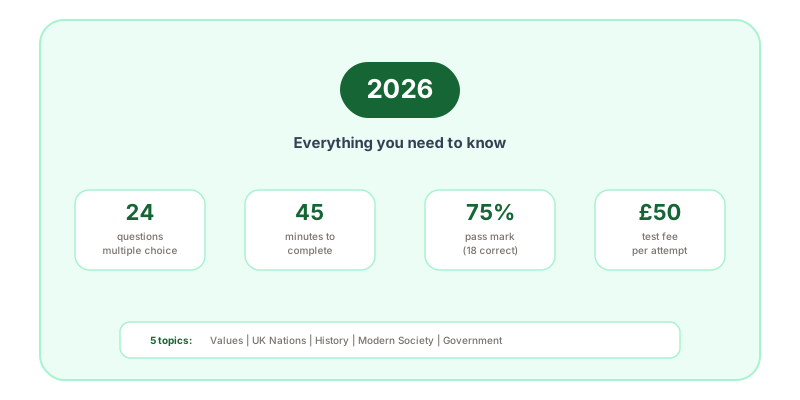
According to the UK Government, the Life in the UK test is a compulsory requirement for anyone applying for British citizenship or indefinite leave to remain (ILR). Here is everything you need to know to prepare and pass in 2026.
What is the Life in the UK test?
It is a computer-based test that checks your knowledge of British values, history, traditions, and everyday life. The content is drawn from the official handbook, Life in the United Kingdom: A Guide for New Residents, published by the Home Office.
Test format at a glance
According to the official GOV.UK guidance:
- 24 multiple-choice questions
- 45 minutes to complete
- 75% pass mark (at least 18 correct answers)
- Results are given immediately after you finish
How much does it cost?
The test fee is £50 (source: GOV.UK), paid when you book online. This fee is non-refundable if you miss your appointment or fail. You can rebook and retake the test as many times as needed.
What topics are covered?
The test draws questions from five main areas of the official handbook:
- Values and principles of the UK — democracy, rule of law, tolerance, and respect
- What is the UK? — nations, geography, and demographics
- A long and illustrious history — key events from early Britain through the 20th century
- A modern, thriving society — religion, customs, sport, arts, and leisure
- The UK government, the law, and your role — Parliament, devolved governments, courts, and civic duties
How to book
- Visit the official GOV.UK booking page
- Create an account and provide your ID details
- Choose a test centre and available date
- Pay the £50 fee online
Test centres are located across the UK. Book early as popular centres fill up quickly. See our step-by-step booking guide for full details.
How to prepare
Most people need 2 to 4 weeks of consistent daily study. A focused routine of 10 to 15 minutes a day is more effective than long last-minute sessions.
- Start with bite-sized lessons covering each handbook chapter
- Use smart review to focus on your weak spots
- Take timed mock tests to practise under real exam conditions
What happens on test day?
- Arrive 15 minutes before your appointment
- Bring your valid photo ID (passport, biometric residence permit, or travel document)
- The test is taken on a computer at the test centre
- You receive your result immediately — pass or fail
If you fail, you can rebook and try again after 7 days. Check our test day checklist to make sure you arrive prepared.
Start preparing today
With PassLifeInUK, you can begin studying for free right now. Daily lessons, smart review, and mock tests are all aligned to the official handbook so there are no surprises on test day.
Disclaimer: This content is for general information only and does not constitute immigration advice. For advice about your individual circumstances, consult a qualified immigration adviser registered with the OISC or a regulated solicitor. Information may change — always check GOV.UK for the latest official guidance. See our editorial policy and corrections policy.