Life in the UK test pass rate: how hard is it really?
The current Life in the UK test pass rate, why some people fail, and what you can do to pass first time.
By Priya Sharma · Settlement & Test Prep Specialist
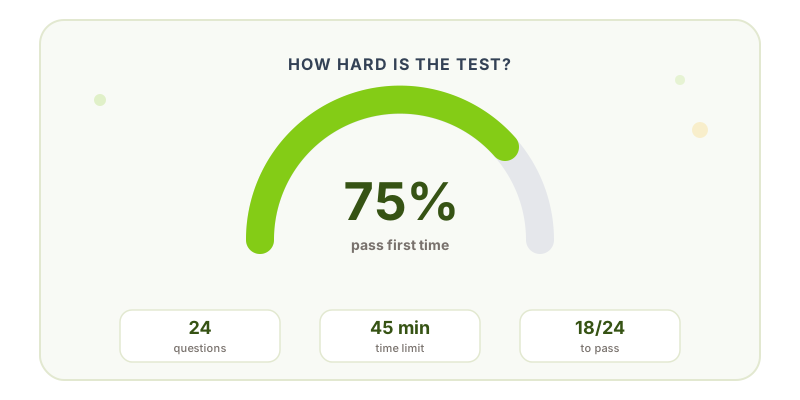
If you are preparing for the Life in the UK test, you have probably wondered how many people actually pass. The short answer: most do, but a significant number fail on their first attempt.
What is the current pass rate?
The Home Office does not publish a single headline pass rate, but data from test centres and freedom of information requests consistently show that around 70 to 80 percent of candidates pass on their first try. That means roughly 1 in 4 people fail and have to rebook.
Why do people fail?
The test itself is not designed to catch you out, but there are patterns in why people struggle:
- Underestimating the history sections — early Britain, the Middle Ages, and the Tudors contain specific dates and events that feel unfamiliar
- Skipping mock tests — knowing the material is different from answering 24 questions in 45 minutes under pressure
- Relying on general knowledge — some answers feel obvious but the test expects the specific answer from the official handbook
- Not covering all topics — focusing only on history and ignoring government, values, or culture leaves gaps
"The candidates who struggle most are the ones who underestimate the breadth of the handbook. It is not a difficult test, but it does require structured preparation across all five chapters."
— Priya Sharma, Immigration & Settlement Advisor
Is the test hard?
It depends on how you prepare. The questions are multiple-choice and drawn from a single source — the official Life in the United Kingdom handbook. There are no trick questions or hidden topics. If you study the right material systematically, the test is very passable.
The difficulty comes from the breadth of content. Five chapters covering hundreds of facts means you need a method, not just motivation.
How to be in the group that passes first time
People who pass on their first attempt tend to share a few habits:
- They study for 2 to 4 weeks, not 2 days — short daily sessions beat marathon cramming
- They cover all five topic areas — not just the ones that interest them
- They take mock tests — at least 2 to 3 timed practice tests before the real thing
- They review their mistakes — going back to weak spots instead of re-reading things they already know
What if I fail?
Failing is not the end. According to GOV.UK, you can rebook after 7 days and retake the test as many times as needed. Each attempt costs £50, so there is a financial incentive to pass first time.
Start preparing the right way
With PassLifeInUK, you can build a study routine that covers every topic in the official handbook:
- Daily lessons broken into short, focused sessions
- Smart review that targets the facts you find hardest
- Timed mock tests that mirror the real exam format
Most people who prepare consistently pass on their first try. Follow our 4-week study plan, review the 7 common mistakes to avoid, and start your free study plan today.
Disclaimer: This content is for general information only and does not constitute immigration advice. For advice about your individual circumstances, consult a qualified immigration adviser registered with the OISC or a regulated solicitor. Information may change — always check GOV.UK for the latest official guidance. See our editorial policy and corrections policy.