7 common mistakes on the Life in the UK test
Avoid these frequent mistakes that catch people out on the Life in the UK test and improve your chances of passing first time.
By Amina Osei · Content Editor & Citizenship Guide Writer
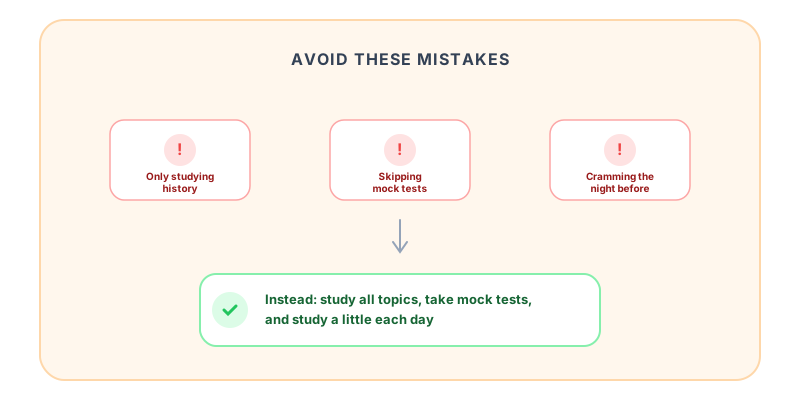
Many people fail the Life in the UK test not because the content is too hard, but because of avoidable mistakes. Here are the 7 most common ones and how to steer clear of them.
1. Only studying the history sections
The test covers much more than history. Questions on values, government, everyday life, and culture appear frequently. Make sure your study plan covers all five handbook areas equally.
2. Ignoring dates and numbers
Specific dates, ages, and statistics come up regularly. Key ones to remember include:
- The UK has 4 nations
- The voting age is 18
- The test has 24 questions and requires 75% to pass
- Key historical dates like 1066 (Battle of Hastings) and 1945 (end of World War II)
3. Relying on general knowledge
Some questions test details that feel like common sense but have specific official answers. Always base your study on the official handbook, not assumptions. Our lessons are aligned to the handbook so you learn the correct answers.
4. Not taking timed practice tests
Knowing the material is different from performing under time pressure. The real test gives you 45 minutes for 24 questions. Take at least 2 to 3 timed mock tests before your appointment to get comfortable with the pace.
5. Cramming the night before
Trying to memorise everything in one session rarely works. Spread your study over 2 to 4 weeks with short daily sessions. Use smart review to revisit facts you struggle with — spaced repetition is far more effective than last-minute cramming.
6. Confusing similar facts
The handbook contains details that are easy to mix up:
- The House of Commons vs the House of Lords
- Devolved powers vs reserved powers
- Patron saints and their associated nations
Pay special attention to these distinctions during your revision.
7. Not reading questions carefully
On the actual test, some questions include words like "not", "except", or "all of the following". Misreading the question is one of the top reasons people choose wrong answers. Practise reading slowly and checking each option.
"When I took the test, I nearly got caught out by a question with the word 'not' in it. I had studied the right material, but I almost chose the wrong answer because I read the question too quickly."
— Amina Osei, Content Editor & Citizenship Guide Writer, who passed the test in 2019
How to avoid these mistakes
- Follow a structured study plan that covers all topics
- Use smart review to target your weak spots
- Take multiple mock tests to build test-day confidence
- Study a little each day rather than all at once
With consistent preparation, there are no surprises on test day. For more guidance, read our 10 revision tips or follow the 4-week study plan. When you are ready, check the test day checklist so nothing catches you off guard.
Start studying for free with PassLifeInUK.
Disclaimer: This content is for general information only and does not constitute immigration advice. For advice about your individual circumstances, consult a qualified immigration adviser registered with the OISC or a regulated solicitor. Information may change — always check GOV.UK for the latest official guidance. See our editorial policy and corrections policy.