A calm 4-week study plan for the Life in the UK test
A friendly weekly plan that keeps your Life in the UK test study light but consistent — from first read to final mock test.
By James Holloway · ESOL Educator & Test Prep Specialist
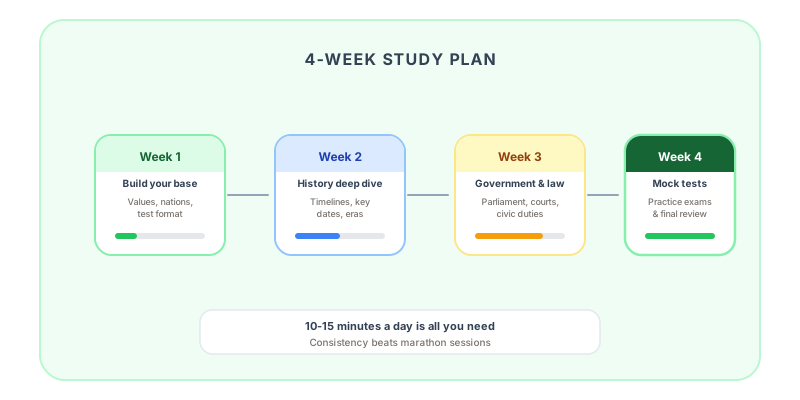
Four weeks is enough time to prepare for the Life in the UK test if you study consistently. You do not need marathon sessions — short, focused daily practice works better for retaining the facts you will be tested on. This plan assumes 15 to 20 minutes a day, six days a week, with one rest day.
Week 1: Build your base
Goal: Get comfortable with the handbook topics and the test format.
- Read short sections from the official handbook every day, even if it is only 10 to 15 minutes. Start with the chapters on values, principles, and traditions.
- Focus on core definitions: the four nations of the UK, fundamental British values, and the test format (24 questions, 45 minutes, 75% pass mark).
- End each session with 3 to 5 quick questions to check what stuck. Use the free practice questions on PassLifeInUK to get started.
- Do not worry about memorising everything. The first week is about building familiarity, not perfection.
Week 2: History and timelines
Goal: Cover the history chapters, which make up a large portion of the test.
- Map the major eras: early Britain, the Middle Ages, the Tudors and Stuarts, the Industrial Revolution, and the 20th century. Understanding the sequence is more useful than memorising every date.
- Use mini timelines — write down five to ten key dates on a card and review them at the start of each session. Important ones include 1066, 1215 (Magna Carta), 1707 (Act of Union), and 1945 (end of World War II).
- Review mistakes twice in the same week. If you got a question wrong on Monday, revisit it on Wednesday or Thursday. Spaced repetition helps facts stick — our smart review feature does this automatically.
- Read our guide on history questions and what to expect for specific topic areas that come up often.
Week 3: Government, law, and society
Goal: Cover the modern-life chapters and start taking full mock tests.
- Learn how Parliament works, including the House of Commons and House of Lords. Understand the roles of the Prime Minister, the monarch, and devolved governments in Scotland, Wales, and Northern Ireland.
- Study the court system, the role of the police, and key rights and responsibilities such as voting, jury service, and respecting the law.
- Practice question sets that mix history and modern life. This is closer to how the real test works — it does not group questions by topic.
- Do one full mock test at the end of the week to see where you stand. Aim for at least 70% on your first attempt.
Week 4: Confidence and polish
Goal: Reach consistent pass-level scores and fill in any gaps.
- Shift your focus to mixed review and mock exams rather than reading new material. You should be reinforcing what you know, not learning from scratch.
- Aim for 80% or higher on at least two mock tests. If you are consistently hitting that mark, you are ready.
- Identify your weak areas from mock test results and give them extra attention. Common trouble spots include British values and what they mean in practice and specific historical dates.
- Do a light review the day before your exam — a single mock test or a quick pass through your most-missed questions is enough. Avoid cramming.
- Check your test day checklist so you know exactly what to bring and when to arrive.
"Four weeks is the sweet spot for most of my students. Any shorter and you are cramming; any longer and motivation starts to drop. The key is keeping sessions short enough that you actually look forward to them."
— James Holloway, ESOL Educator & Test Prep Specialist
Tips that apply every week
- Consistency beats intensity. Fifteen minutes a day for six days is more effective than one two-hour session on Saturday.
- Use dead time. Review a few flashcards on your commute or during a break. Our review feature is designed for exactly this.
- Do not ignore topics you find boring. The test pulls from all chapters equally, so skipping government or history leaves gaps.
- Track your progress. Seeing your scores improve is motivating and helps you spot which areas still need work.
If your schedule is tight, keep daily sessions short but consistent. The test is short too — clarity matters more than marathon sessions. You can also read our 10 revision tips and 7 common mistakes to avoid for more guidance.
Disclaimer: This content is for general information only and does not constitute immigration advice. For advice about your individual circumstances, consult a qualified immigration adviser registered with the OISC or a regulated solicitor. Information may change — always check GOV.UK for the latest official guidance. See our editorial policy and corrections policy.