British values on the Life in the UK test: what you need to know
A clear guide to the British values and principles tested on the Life in the UK test, with key facts to remember.
By James Holloway · ESOL Educator & Test Prep Specialist
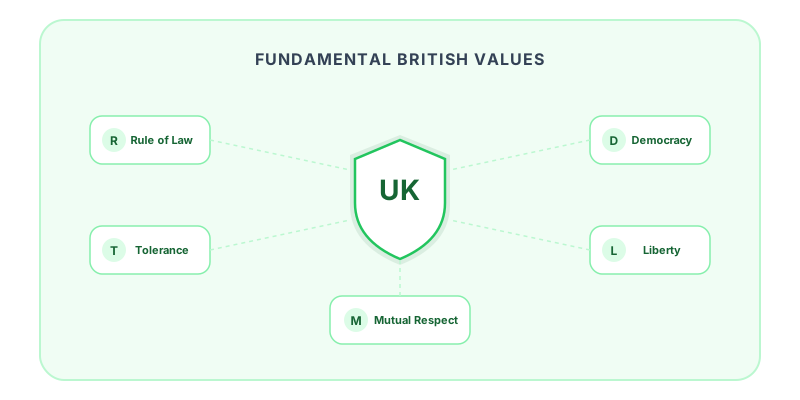
The first chapter of the official Life in the United Kingdom handbook — Values and principles of the UK — sets the foundation for the entire test. Questions on British values appear on almost every test, and they are some of the easiest marks to pick up if you prepare properly.
What are the fundamental British values?
The handbook identifies several core values that underpin life in the UK:
- Democracy — the people choose who governs through free elections
- The rule of law — everyone is subject to the law, including the government
- Individual liberty — freedom of thought, expression, and belief
- Tolerance and mutual respect — respect for different faiths, cultures, and lifestyles
- Participation in community life — contributing to society and treating others with fairness
These values are not just theoretical. The test expects you to understand how they apply in everyday British life.
Key facts the test expects you to know
Responsibilities of UK residents
- Obey the law
- Pay taxes
- Serve on a jury if called
- Respect the rights of others
- Look after yourself and your family
Rights of UK residents
- Freedom of speech and expression
- Freedom of religion
- Freedom from discrimination
- The right to a fair trial
- The right to vote (for citizens and qualifying Commonwealth citizens)
Mutual respect in practice
- The UK is a diverse society with many faiths, cultures, and ethnic backgrounds
- Discrimination based on age, disability, sex, race, religion, sexual orientation, or gender reassignment is against the law
- The Equality Act 2010 protects people from discrimination
Common question styles on values
You will see questions like:
- "What is a fundamental principle of British life?" — expect answers about democracy, rule of law, or tolerance
- "What is a responsibility of UK residents?" — paying taxes, obeying the law, serving on a jury
- "True or false: discrimination based on [characteristic] is against the law" — almost always true under the Equality Act
Why values questions are easy marks
Unlike history, where you need to remember specific dates and events, values questions test your understanding of principles. The answers tend to be consistent and logical. If you read the first chapter of the handbook carefully and review the key points above, you can answer most values questions correctly.
Do not skip this chapter
Some people rush through values to spend more time on history or government. That is a mistake. Values questions are quick marks that you cannot afford to drop, especially if you find other sections harder.
Study values with PassLifeInUK
Our daily lessons include focused sessions on values and principles, so you build a solid understanding before moving on to more detailed topics. Use smart review to make sure the key facts stick.
Start studying values for free and build your confidence from chapter one. For a structured approach, follow our 4-week study plan or browse all revision tips.
Disclaimer: This content is for general information only and does not constitute immigration advice. For advice about your individual circumstances, consult a qualified immigration adviser registered with the OISC or a regulated solicitor. Information may change — always check GOV.UK for the latest official guidance. See our editorial policy and corrections policy.